Serving Utensils and Pitchers: Building a Hosting Set
You’ve spent the afternoon prepping a roast, the table looks lovely, and then it happens — the roast potatoes are ready but there’s no slotted spoon in sight. Or the jug of water you promised yourself you’d buy is still sitting on a shelf somewhere, so you’re pouring from a teapot instead. We’ve all been there. The fix isn’t buying more plates or another set of wine glasses; it’s building a proper hosting set of serving utensils and pitchers, so that when guests arrive, everything you need is already within reach.
Why Serving Utensils and Pitchers Are the Backbone of Any Hosting Set
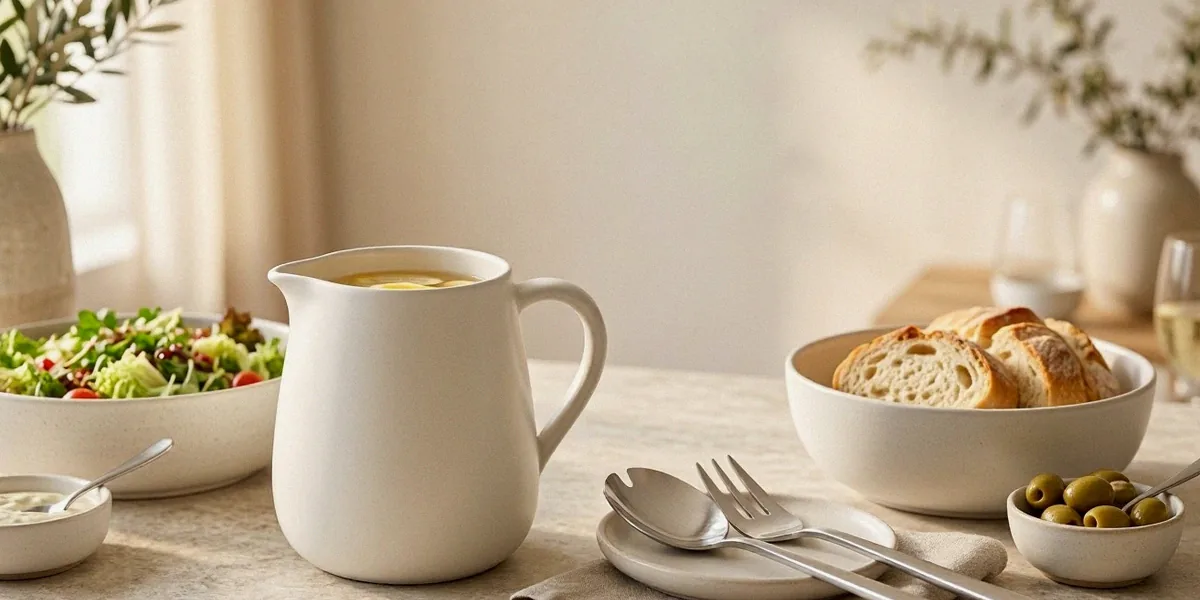
Plates and glasses get all the attention when people talk about tableware, but they’re not what makes a dinner run smoothly. It’s the ladle that reaches the bottom of the stew pot, the salad servers that don’t leave half the leaves behind, and the pitcher that keeps water flowing without a trip to the kitchen every ten minutes. A well-chosen set of serving pieces removes the last-minute panic and, just as importantly, makes the food itself look better on the table.
The unsung heroes of the dinner table
Think about the meals you remember fondly. Chances are the serving tools played a quiet role — a wooden spoon that felt good in the hand, a gravy boat that poured cleanly, tongs that gripped rather than dropped. These are the pieces that guests borrow mentally for their own kitchens. We recommend starting with a core group: a slotted spoon, a solid serving spoon, a ladle, salad servers, and a good pair of tongs. From there, add a pie server, a cake slice, and a cheese knife as your hosting style develops.
How a pitcher doubles as a vase or water carafe
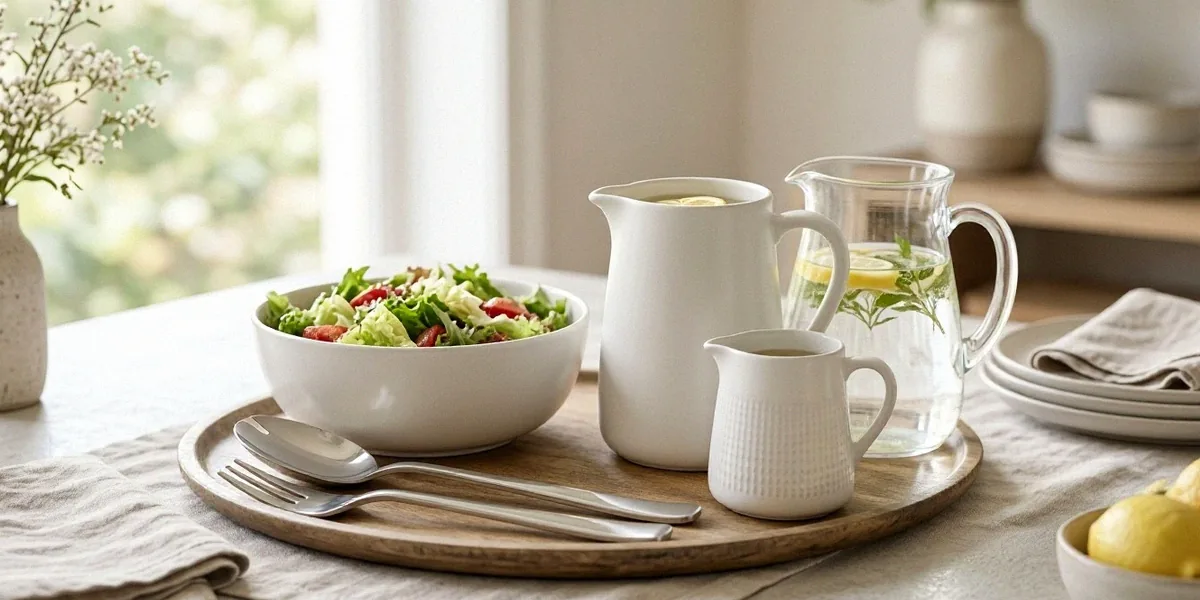
A glass pitcher is one of the most versatile things you can own. Fill it with iced water and lemon slices for the table, then rinse it out and use it as a vase for supermarket tulips the next day. In British entertaining, this dual purpose is genuinely common — a simple glass jug moves from drinks duty to centrepiece without anyone raising an eyebrow. If you’re short on cupboard space, that flexibility alone justifies the purchase.
Choosing the Right Materials for UK Homes
Durability matters more than ever when you’re buying pieces you’ll use weekly. In UK kitchens, stainless steel and acacia wood are the most common materials for serving utensils, and for good reason: both handle heat well, both look smart on a table, and both are widely available at every price point. Ceramic and glass round out the options, particularly for pitchers and serving bowls.
Stainless steel vs. wood: pros and cons
- Stainless steel: dishwasher-safe, won’t absorb flavours or stains, resists rust, and works with every table style. Downsides: it can scratch non-stick pans and feels cold in the hand.
- Acacia wood: warm, tactile, and beautiful for salad servers and chopping boards. Downsides: never put it in the dishwasher, and it needs occasional oiling to stop it drying out and cracking.
Many UK shoppers prefer dishwasher-safe and heat-resistant options, especially for everyday pieces. Our advice is to mix the two — steel for anything that touches a hot pan, wood for anything that goes straight from board to table.
Glass pitchers for summer entertaining
Glass pitchers are often used as both drink servers and vases in British entertaining, and summer is when they earn their keep. Look for borosilicate glass if you can find it, as it copes better with temperature changes than standard soda-lime glass. A one-litre capacity suits most households; two litres is better if you’re regularly hosting six or more people.
Mixing and Matching: Building a Cohesive Look
You don’t need everything to match — in fact, a table where every piece is identical can look a bit flat. The trick is coordinating finishes rather than copying them. Pick two or three tones you like, such as matte black, copper, and natural wood, and let them repeat across your utensils, pitchers, and serving boards. John Lewis and Dunelm are popular UK homeware retailers for hosting sets, and both are useful for seeing how different finishes sit together in person before you commit.
The rule of three textures
We borrow this idea from interior styling: aim for three distinct textures on the table. For example, smooth ceramic, warm wood, and brushed metal. Three is enough to feel intentional without tipping into clutter. If you’re building gradually, buy one piece in each texture first and see how they read together at an actual meal.
Seasonal swaps for a fresh table
Keep a small box of seasonal pieces and rotate them. Lighter glass and pale wood for spring and summer; darker ceramics, copper accents, and heavier boards for autumn and winter. It costs very little and makes the same core set feel new every few months.
Personalised Touches That Make Great Gifts
Personalised gifts, such as engraved chopping boards, are a top trend for UK weddings and housewarmings, and serving pieces are ideal candidates because they’re used often and displayed proudly. An engraved serving spoon or a monogrammed pitcher says far more than a generic boxed set, and it doesn’t have to cost much more either.
Engraving ideas for utensils
- The couple’s initials and wedding date on a wooden salad server set
- A family surname on a large acacia chopping board
- A short phrase like “Gather” or “Made with love” on a serving spoon handle
- House coordinates for a new-home gift
Monogrammed pitchers for new homeowners
A monogrammed glass pitcher makes a genuinely useful housewarming gift — it’s the sort of thing people admire but rarely buy for themselves. Pair it with a set of linen napkins or a small vase and you have a present that feels considered rather than last-minute.
Where to Shop and What to Spend
There’s a price point for every budget, and you don’t need to buy everything at once. Wilko and M&S offer budget-friendly and mid-range serving utensils and pitchers, while John Lewis and Dunelm sit comfortably in the mid to upper range. Independent kitchen shops and local makers are worth seeking out for one-off wooden pieces and personalised work.
Budget-friendly starter sets under £30
You can assemble a functional core set for under £30 by shopping own-brand ranges: a stainless steel spoon and ladle, a pair of tongs, and a basic glass jug. It won’t be heirloom quality, but it will get you through a dinner party without a scramble.
Investment pieces worth the splurge
Spend more on the pieces you touch most: a heavy acacia chopping board, a well-balanced ladle, and a borosilicate glass pitcher. These are the items that last a decade or more with basic care, and they’re the ones guests actually notice.
Caring for Your Serving Set So It Lasts
Good care is what separates a set that lasts three years from one that lasts fifteen — and it’s also what keeps your pieces gift-worthy if you plan to pass them on.
Wood care: oiling and drying
Hand-wash wooden utensils and boards in warm soapy water, then dry them straight away rather than leaving them to air-dry on the rack. Once a month, rub in a food-safe mineral oil or board butter and let it soak overnight. Never soak wood or put it in the dishwasher; both cause splitting.
Glass and ceramic: avoiding cracks
Avoid thermal shock by letting glass and ceramic pieces come to room temperature before adding hot liquid, and never pour boiling water into a cold jug. Wash by hand where you can, and stack with a cloth between pieces to prevent chipping.
For stainless steel, a quick polish with a soft cloth and a little warm soapy water keeps the shine. Avoid abrasive scourers, which dull the finish and leave scratches that trap residue.
FAQ
What should I include in a basic hosting set?
Start with a slotted spoon, a solid serving spoon, a ladle, salad servers, tongs, and a glass pitcher. That covers the vast majority of everyday hosting situations, and you can add specialist pieces like a gravy boat or cake slice later.
Are wooden serving utensils better than stainless steel?
Neither is better overall — they suit different jobs. Stainless steel is dishwasher-safe and ideal for hot pans, while acacia wood is warmer on the table and kinder to non-stick surfaces. Most well-stocked kitchens have both.
Can a glass pitcher really be used as a vase?
Yes, and it’s a common habit in British homes. A simple glass jug works beautifully for tulips, daffodils, or dried stems, provided you clean it thoroughly between uses so no drink residue affects the flowers.
Where can I buy personalised serving gifts in the UK?
Many independent kitchen shops and online makers offer engraving on chopping boards, spoons, and pitchers. Larger retailers such as John Lewis and Dunelm also stock personalised and gift-ready homeware ranges, particularly around wedding season.
How do I stop my wooden chopping board from cracking?
Never soak it, never put it in the dishwasher, and oil it roughly once a month with a food-safe oil. Store it upright or flat rather than propped near a radiator, as sudden heat changes are a common cause of splits.
A thoughtfully assembled hosting set — a few good utensils, a versatile pitcher, and a board or two you’re proud to put on the table — makes entertaining feel effortless rather than stressful. Build it gradually, care for it properly, and those everyday meals start to feel like occasions.




Post Comment