Eco-Friendly Gift Wrapping with Fabric and Recycled Paper
It’s 9am on Christmas morning, the floor is ankle-deep in crumpled paper, and someone’s already trying to work out which bin the glittery stuff goes in. We’ve all been there. A few years ago, our team looked at our own post-present carnage and realised something uncomfortable: almost none of it could be recycled. So we set ourselves a challenge — keep the joy of the big reveal, lose the landfill guilt. What follows is everything we’ve learned about wrapping beautifully with fabric, recycled paper, and a bit of imagination.
Why Traditional Wrapping Paper Is a Problem in the UK
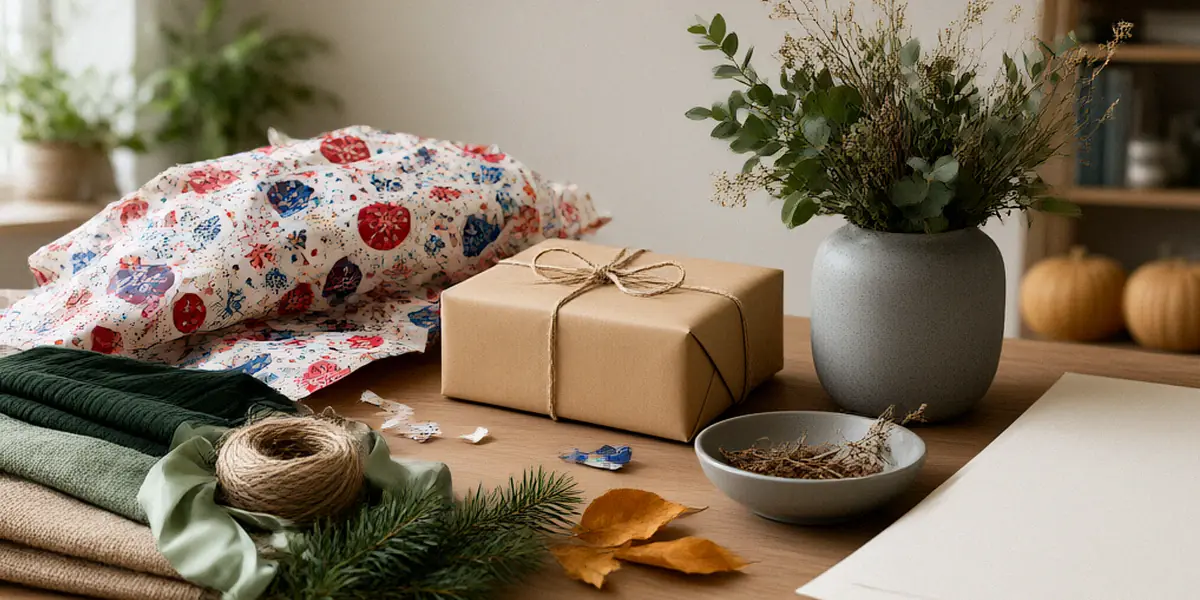
The festive season creates a huge amount of avoidable waste, and wrapping paper is one of the worst offenders. According to WRAP, UK households get through around 227,000 miles of wrapping paper each Christmas — enough to wrap the planet several times over. The trouble is that most of it isn’t recyclable at all, so it heads straight to landfill or incineration rather than being turned into something new.
The recycling confusion: what your council actually accepts
Here’s the frustrating part: most UK councils reject glittery, foil, or plastic-coated wrapping paper in recycling bins, and rules vary wildly from one local authority to the next. A roll that’s fine in Leeds might be turned away in Bristol. The simplest test is the scrunch test — if you scrunch the paper and it springs back, it almost certainly contains plastic and belongs in general waste. If it stays scrunched, it’s usually paper-based and can go in your kerbside recycling, though it’s always worth checking your council’s website first.
The hidden plastics in shiny and metallic wraps
That mirror-shine finish and those embedded glitter flecks aren’t decoration — they’re layers of plastic film, foil, or metallic coating bonded to the paper. They can’t be separated at the recycling plant, so the whole sheet is contaminated. Ribbons, bows, and sticky tape cause the same problem, often jamming sorting machinery. When you add it all up, the UK throws away enough wrapping paper to circle the equator nine times. That’s the number that convinced us to change how we wrap.
Fabric Wrapping: The Reusable Revolution (Furoshiki)
Furoshiki is a traditional Japanese fabric-wrapping method that creates reusable gifts in themselves — the cloth isn’t packaging, it’s part two of the present. Once you know a couple of folds, you can wrap almost anything, from a paperback to a wine bottle, in under a minute. For UK shoppers, the materials are already sitting in your wardrobe or on your local high street.
Basic furoshiki folds anyone can master
Start with three folds and you’ll cover most gift shapes:
- The classic carry wrap: lay the cloth diagonally, place the gift in the centre, bring opposite corners together and tie a double knot.
- The bottle wrap: roll the bottle in the cloth, twist the ends, and tie them together like a cracker.
- The flat book wrap: fold the cloth around the book like an envelope and secure with a knot on top.
No tape, no scissors, no waste — and the recipient can reuse the cloth for years.
Where to find affordable fabric in the UK
You don’t need to buy anything new. Charity shops such as Oxfam and British Heart Foundation regularly sell scarves for £1–£3, and vintage specialists like Beyond Retro stock offcuts and seconds at low prices. Fabric shops often sell end-of-roll remnants by the metre, and online marketplaces have bundles of quilting cotton that work perfectly for smaller gifts.
Using vintage scarves and tea towels as wraps
This is our favourite trick. A pretty vintage scarf becomes a gift in its own right, especially for a friend who loves charity-shop finds. Patterned tea towels from brands like Ulster Weavers or local makers are ideal for wrapping kitchen gifts — a jar of homemade chutney wrapped in a tea towel feels genuinely thoughtful. The wrap is part of the present, so nothing is thrown away.
Recycled Paper and Brown Paper: Simple, Stylish, Sustainable
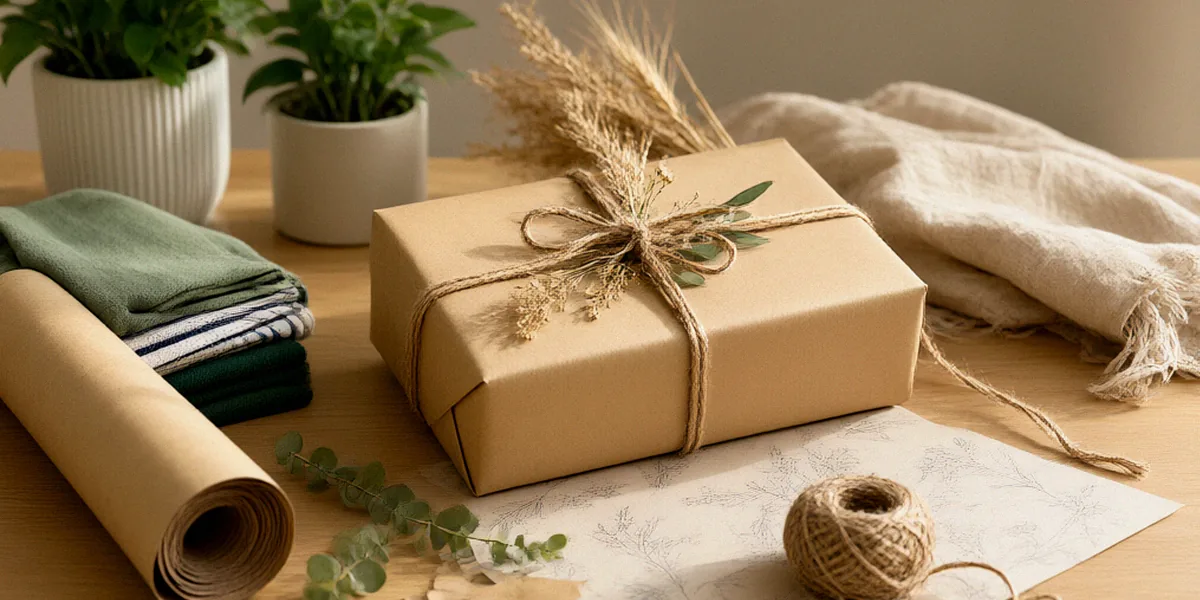
If fabric feels like a stretch, plain brown paper is your best friend. It’s widely recyclable and compostable, it costs pennies, and it looks effortlessly chic with the right finishing touches. You can pick up rolls from Eco Craft, most local post offices, and even the supermarket — just avoid anything labelled “metallic” or “foil effect”.
Decorating with natural and compostable embellishments
Skip the plastic bows and reach for things you can compost or reuse:
- Dried orange slices threaded onto twine
- Sprigs of rosemary or eucalyptus from the garden
- Cinnamon sticks tied in a bundle
- Jute twine or paper raffia instead of ribbon
These touches make brown paper look deliberate and expensive rather than plain.
Stamping and potato printing for personalised touches
Personalised gifts don’t need a printing budget. A simple potato stamp cut into a star, heart, or initial, dipped in water-based ink, transforms a plain sheet into something bespoke. It’s a lovely activity to do with children, and the results look charmingly handmade rather than mass-produced.
Reusing old maps, sheet music, and book pages
Old Ordnance Survey maps, sheet music, and damaged book pages make beautiful, free wrapping for the right recipient. A map-wrapped gift for a walker, or sheet music for a musician, adds a personal layer that no shop-bought paper can match. Just check the paper is clean and dry before you start folding.
Eco-Friendly Wrapping for Secret Santa and Christmas Gifts
Office Secret Santa is where eco-wrapping really earns its keep. With a typical £10 limit, presentation matters more than price, and reusable wraps solve the problem of buying paper you’ll only use once. It’s also worth remembering that the UK throws away enough wrapping paper to circle the equator nine times — a small office swap genuinely adds up.
Budget-friendly eco wraps for office Secret Santa
Try these low-cost, low-waste ideas:
- Wrap the gift in a reusable cotton tote bag the recipient can keep for shopping.
- Use a clean glass jar with a fabric lid cover and twine — great for sweets or stationery.
- Tie fabric scraps around small items and finish with a handwritten tag.
- Reuse a sturdy gift box from last year and decorate it with paper offcuts.
Zero-waste hamper wrapping with baskets and cloth
Gift hampers are a gifting staple, but the cellophane and shredded plastic filler are a nightmare to recycle. Instead, build your hamper in a wicker basket, wooden crate, or sturdy cardboard box lined with a vintage tea towel or cloth napkin. The container becomes part of the gift, and there’s nothing to bin afterwards. If you’re buying a ready-made hamper, look for UK brands that use recyclable cardboard and paper padding rather than plastic.
Our Team’s Favourite Eco Wrapping Supplies and UK Brands
We’ve tested a lot of options over the years, and these are the ones we keep coming back to. Who Gives A Crap and Re-Wrapped are UK-based eco-friendly wrapping paper brands worth knowing — both use recycled paper and avoid plastic coatings. Local zero-waste shops such as The Refill Larder stock tape, twine, and paper by the metre, so you can buy only what you need.
Recycled tape and compostable ribbon options
Standard sticky tape is plastic and can’t be recycled, so it contaminates an otherwise recyclable parcel. Paper tape, available from most zero-waste shops and online, sticks just as well and can go in the recycling bin with the paper. For ribbon, look for paper raffia, jute twine, or compostable cotton ribbon — all of which can be reused or composted.
Supporting small UK businesses and charities
Buying your wrapping supplies from independent UK shops and charity shops keeps money in local communities and often costs less than the big-brand alternatives. Beeswax wraps are another brilliant reusable option — they work as food wrap long after the gift is opened, and you can find them from small makers across the country.
How to Make Your Eco Wrapping Look Beautiful (Not Boring)
There’s a persistent myth that eco wrapping looks worthy but dull. We disagree entirely. A gift wrapped in fabric or brown paper, finished with a handwritten tag and a sprig of greenery, reads as more thoughtful than a glossy commercial wrap — because it clearly took care.
Colour palettes and natural textures
Pick a simple palette and repeat it across all your gifts: kraft brown with white and green, or cream with deep red and gold thread. Mixing textures — smooth paper, rough twine, soft fabric — adds visual interest without any plastic. Foraged greenery from the garden or a local park costs nothing and looks festive.
Personalised tags from recycled card
Cut tags from old greetings cards or cereal-box card, punch a hole, and write the recipient’s name by hand. A handwritten tag instantly lifts the whole parcel and makes it feel considered rather than rushed.
Photography tips for sharing your eco wraps
If you want to share your wraps on social media, natural daylight is your friend. Photograph gifts on a wooden table or linen cloth, keep the background uncluttered, and shoot from slightly above. Close-ups of twine knots, dried orange slices, and handwritten tags tend to perform best — they show the detail that makes eco wrapping special.
FAQ
Can I recycle wrapping paper in the UK?
Only if it passes the scrunch test. Plain paper that stays scrunched when you crush it can usually go in your kerbside recycling, but glittery, foil, or plastic-coated wraps cannot. Always check your local council’s guidance, as rules differ across the UK.
What is furoshiki and how do I use it?
Furoshiki is a traditional Japanese fabric-wrapping method that creates reusable gifts. You wrap items in cloth using simple folds and knots instead of tape, and the fabric — a scarf, tea towel, or offcut — becomes part of the present.
Where can I buy eco-friendly wrapping paper in the UK?
Who Gives A Crap and Re-Wrapped are two UK-based brands using recycled paper without plastic coatings. Local zero-waste shops like The Refill Larder also stock recycled paper, paper tape, and twine, as do many post offices and independent stationers.
Is brown paper recyclable and compostable?
Yes. Plain brown kraft paper is widely recyclable and compostable, as long as it isn’t covered in plastic tape, glitter, or metallic finishes. Use paper tape and natural twine to keep the whole parcel recyclable.
How can I wrap Secret Santa gifts without plastic?
Use reusable tote bags, glass jars with fabric lids, or fabric scraps tied with twine. For hampers, choose wicker baskets or cardboard boxes lined with a tea towel instead of cellophane and plastic filler.
You don’t have to overhaul Christmas in one go. Pick a single swap this year — a roll of recycled paper, a scarf from a charity shop, or a roll of paper tape — and build from there. Thoughtful presentation has never been about perfect plastic wrap; it’s about the care you put into the reveal. Start small, enjoy the process, and let your wrapping do a little good along the way.



Post Comment