Eco-Friendly Gift Wrap Ideas for a More Sustainable Celebration
It’s Boxing Day morning. The floor is buried under a colourful avalanche of torn paper, curling ribbon and stray bits of sticky tape, and the bin is already full. If that scene feels familiar, you’re not alone — and it’s exactly why our team started looking harder at how we wrap the gifts we give. We wanted options that still feel special when someone tears them open, but don’t come with a bin bag full of guilt afterwards. So whether you’re wrapping a birthday present in July or a Christmas haul in December, here’s what we’ve found works beautifully.
Why We’re Rethinking Gift Wrap in the UK
The numbers around festive waste in the UK are genuinely startling. WRAP UK estimates that UK households throw away enough wrapping paper to circle the globe 9 times each Christmas. That’s not a small habit we’re talking about — it’s a national one. And the problem isn’t just volume. Much of what we put in the recycling bin never actually gets recycled, because the materials used in cheap wrapping paper make it difficult or impossible to process.
The Recycling Confusion: What Actually Goes in the Bin?
Here’s the frustrating part: many UK councils do not recycle foil or glitter-covered wrapping paper. Anything metallic, laminated, or embedded with sparkle is usually rejected at the sorting stage, which means it ends up in general waste or, worse, contaminates a whole load of otherwise recyclable paper. The humble scrunch test is still a decent rule of thumb — if the paper springs back when you scrunch it, it’s probably plastic-coated and destined for the bin. If it stays crumpled, it has a fighting chance. But when in doubt, check your local council’s guidance, because rules vary enormously from one authority to the next.
The Rise of Plastic-Free Packaging in UK Shops
The good news is that UK retailers have noticed. Plastic-free packaging is becoming a genuine selling point rather than a niche gimmick, and smaller British brands are leading the way. From online gift shops to high street chains, there’s now real pressure to ditch the cellophane and the plastic tape. As shoppers, we have more power here than we sometimes realise — every time we choose the paper-free option, we’re voting for it to stick around.
Our Favourite Recycled and Recyclable Wrapping Papers
If you want to swap out the shiny stuff without losing the joy of a beautifully wrapped parcel, there are some excellent UK options. Re-wrapped is a UK company that makes recycled and recyclable wrapping paper, printed with vegetable-based inks and free from foil and plastic lamination. Wrag Wrap is another British name worth knowing, offering reusable fabric wraps and recycled paper alternatives. Both prove that eco-friendly doesn’t have to mean beige and boring.
Kraft Paper: The Budget-Friendly Blank Canvas
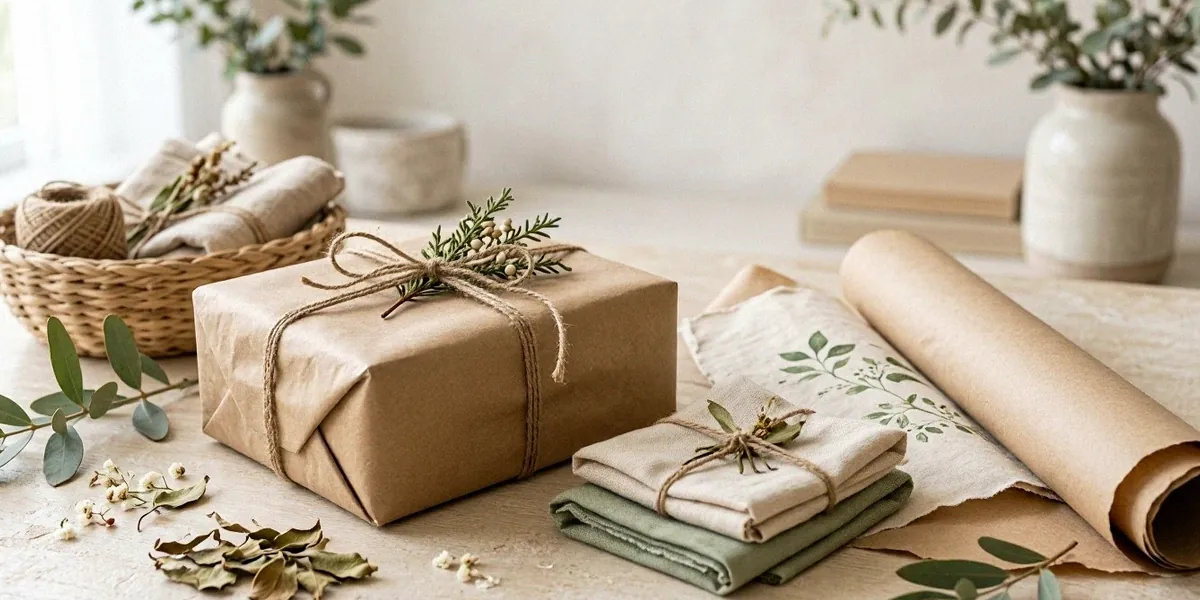
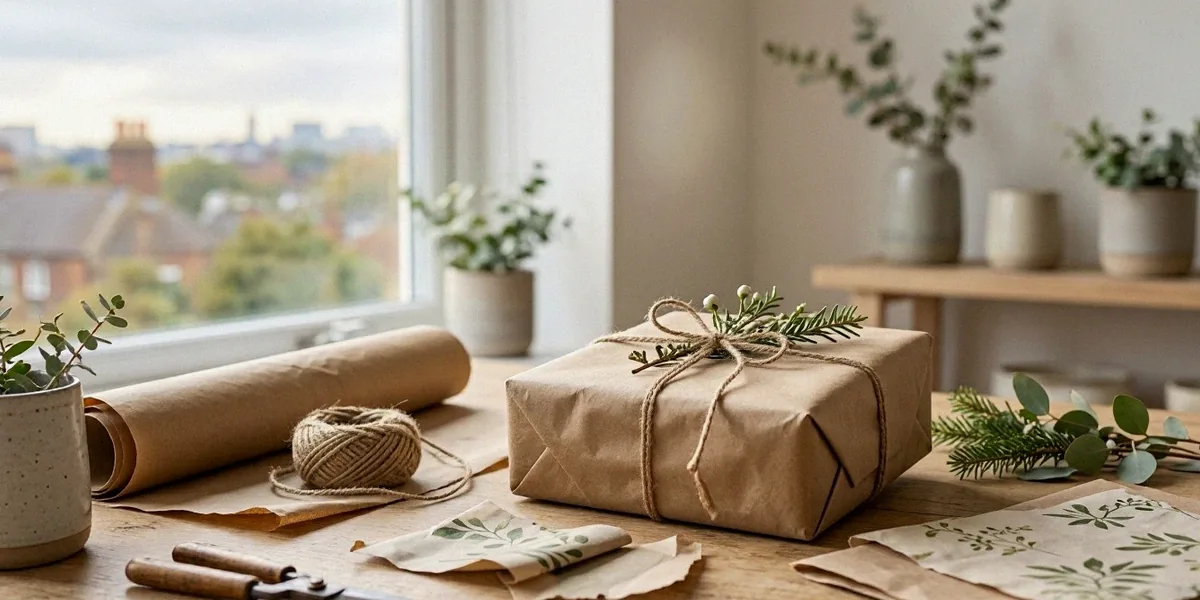
Plain brown kraft paper is the workhorse of sustainable wrapping, and it’s widely available from Wilko, Hobbycraft and most stationery shops for very little money. On its own it can look a bit plain, but that’s the point — it’s a blank canvas. A length of jute twine, a sprig of dried lavender, a hand-stamped pattern or a personalised tag transforms it into something that looks deliberately rustic rather than cheap. We use it constantly for chopping boards and other kitchen gifts because it suits that natural, handmade aesthetic perfectly.
Recycled Tissue Paper and Tape Alternatives
Inside the parcel matters too. Recycled tissue paper in muted tones adds a lovely layer of anticipation without the plastic sheen of conventional tissue. Pair it with paper tape rather than standard sticky tape — paper tape can go straight into the recycling with the wrapping, whereas plastic tape has to be picked off and binned. It’s a small switch, but it saves a lot of fiddly sorting later.
Fabric Wrapping: The Reusable Revolution
Furoshiki is a traditional Japanese fabric wrapping method now popular in the UK, and once you’ve tried it, it’s hard to go back. The idea is simple: a square of fabric is folded and knotted around a gift, with no tape, no paper and no waste. The wrap itself becomes part of the present — a scarf, a tea towel, a piece of vintage linen — and it can be reused for years. Compared to single-use paper, the maths is compelling: one fabric wrap might cover dozens of gifts over its lifetime.
How to Wrap with Furoshiki: A Simple Step-by-Step
- Lay your fabric square flat, patterned side down, and place the gift in the centre at a slight diagonal.
- Bring two opposite corners together over the top of the gift and tie a single knot.
- Take the remaining two corners, cross them over the knot and tie again to secure.
- Adjust the fabric so the folds sit neatly, and tuck in any loose ends.
For a bottle or a tall box, there’s a variation where you roll the fabric around the item and twist the ends — it takes about thirty seconds once you’ve practised a couple of times.
Where to Buy Reusable Fabric Wraps in the UK
You don’t need to buy anything special. Scarves and tea towels from UK homeware brands like Sophie Allport make wonderful wraps, and they double as a second gift. Charity shops are goldmines for inexpensive scarves and offcuts of fabric. If you’d rather buy purpose-made wraps, Wrag Wrap and a growing number of Etsy sellers offer them in a range of sizes and prints.
Natural and Upcycled Decorations for Your Gifts
Decorations are where a lot of the hidden plastic lives — plastic bows, foil stars, synthetic ribbon. We’ve had great results replacing all of it with natural materials. Dried orange slices, cinnamon sticks and sprigs of rosemary from the garden look and smell wonderful, and unlike plastic bows, they can go straight into the compost after use. Hobbycraft is a reliable UK retailer for affordable dried florals if you don’t fancy drying your own.
Foraging-Friendly Ideas for a Woodland Theme
If you have access to a garden or a local wood, a woodland theme is easy to pull off. Small pine cones, dried seed heads, holly leaves and twisted hazel stems all work beautifully tied with jute twine. Just be mindful of what you take and where from — stick to fallen material rather than cutting from living plants, and avoid anything from protected sites.
Upcycling Old Maps and Sheet Music as Tags
Old maps, sheet music and book pages make charming, completely free gift tags. Cut them into rectangles or simple shapes, punch a hole in the corner and thread them onto your twine. A map tag is a lovely touch for a travel-themed gift, while sheet music suits anything musical. It’s a nice way to give a second life to paper that would otherwise be thrown out.
Eco-Friendly Gift Wrap for Personalised Presents
Awkward shapes are the real test of any sustainable wrapping approach. A personalised chopping board is heavy, flat and often an odd size, while soft toys are squishy and refuse to hold a crisp fold. Both are far easier to handle with fabric wraps or reusable gift bags than with paper and tape. Happily, many UK personalised gift shops now offer plastic-free packaging options as standard, so it’s worth asking before you order.
Wrapping Chopping Boards Without Tape
For a chopping board, we like a simple fabric wrap using a tea towel large enough to cover the board completely. Lay the board diagonally, fold the corners over, and tie the ends in a knot at the back. The tea towel becomes part of the gift, and there’s no tape anywhere near it. If you’d rather use paper, kraft paper with a twine tie works well — just avoid sticky tape so the whole thing can be recycled together.
Soft Toys: Using Reusable Drawstring Bags
Soft toys are best presented in a reusable drawstring bag, ideally made from cotton or recycled fabric. The bag protects the toy, looks charming, and gets reused for storage, laundry or future gifting. It’s a particularly good option for children’s presents, because the bag tends to survive long after the toy has been outgrown.
Tips for a Zero-Waste Gift Wrapping Station
The single biggest change we’ve made is keeping a dedicated wrapping station stocked and ready. When everything is in one place, you’re far less likely to reach for whatever’s left over from last year. Our essentials are paper tape, jute twine, recycled paper, a pair of sharp scissors and a box of saved tags and ribbon from gifts we’ve received. UK stationery brand Paperchase, now trading online, offers eco ranges worth browsing.
- Paper tape instead of plastic sticky tape
- Jute or cotton twine instead of synthetic ribbon
- Recycled kraft paper in a couple of widths
- A stash of reused tags, bags and fabric wraps
- Dried decorations kept in a sealed jar
Storing and Reusing Wrapping Materials
When you receive a gift, take thirty seconds to salvage what you can. Carefully remove the paper, flatten it, and store it flat rather than crumpled. Gift bags, ribbon and fabric wraps can all be reused multiple times. It feels slightly odd the first time you re-gift a bag, but it quickly becomes second nature — and nobody has ever noticed or minded.
DIY Paper Tape and Natural Twine
If you’re feeling crafty, you can make your own paper tape by brushing a strip of kraft paper with a flour-and-water paste. It’s messier than shop-bought paper tape but works perfectly well for light parcels. Natural twine, meanwhile, is endlessly versatile — wrap it around a parcel several times, tie a bow, and add a dried orange slice or a sprig of rosemary for a finish that looks far more expensive than it cost.
FAQ
Can you recycle wrapping paper with glitter on it?
No. Many UK councils do not recycle foil or glitter-covered wrapping paper, because the metallic and plastic elements can’t be separated during processing. Glitter is particularly problematic as it contaminates other recyclable paper. Put glittered paper in general waste, or better still, avoid buying it in the first place.
What is furoshiki and is it suitable for beginners?
Furoshiki is a traditional Japanese fabric wrapping method now popular in the UK. It uses a square of cloth folded and knotted around a gift, with no tape or paper required. It’s very beginner-friendly — most simple wraps take under a minute once you’ve tried them a couple of times.
Where can I buy eco-friendly wrapping paper in the UK?
Re-wrapped is a UK company that makes recycled and recyclable wrapping paper, and Wrag Wrap offers reusable fabric alternatives. For budget options, plain kraft paper from Wilko or Hobbycraft can be dressed up with twine and natural decorations. Paperchase, now online, also stocks eco ranges.
Is brown kraft paper actually recyclable?
Yes, plain brown kraft paper is widely recyclable and often made from recycled content itself. Just make sure you remove any plastic tape, synthetic ribbon or foil decorations before putting it in the recycling bin. Paper tape can stay on.
How do I wrap an odd-shaped personalised gift sustainably?
Fabric wraps and reusable drawstring bags are the easiest solution for awkward shapes like chopping boards and soft toys. A large tea towel or scarf can cover most boards without any tape, and the wrap becomes part of the gift. Many UK personalised gift shops also offer plastic-free packaging if you’d prefer to keep it simple.
None of this requires a complete overhaul of how you celebrate. Swapping plastic tape for paper tape, keeping a few fabric wraps in a drawer, or saving the paper from gifts you receive are all small moves — but multiplied across a household, a street, a whole country, they add up to something meaningful. We’d love to hear what’s worked for you, so share your own eco-friendly wrapping tips with our community and help someone else ditch the glitter for good.



Post Comment