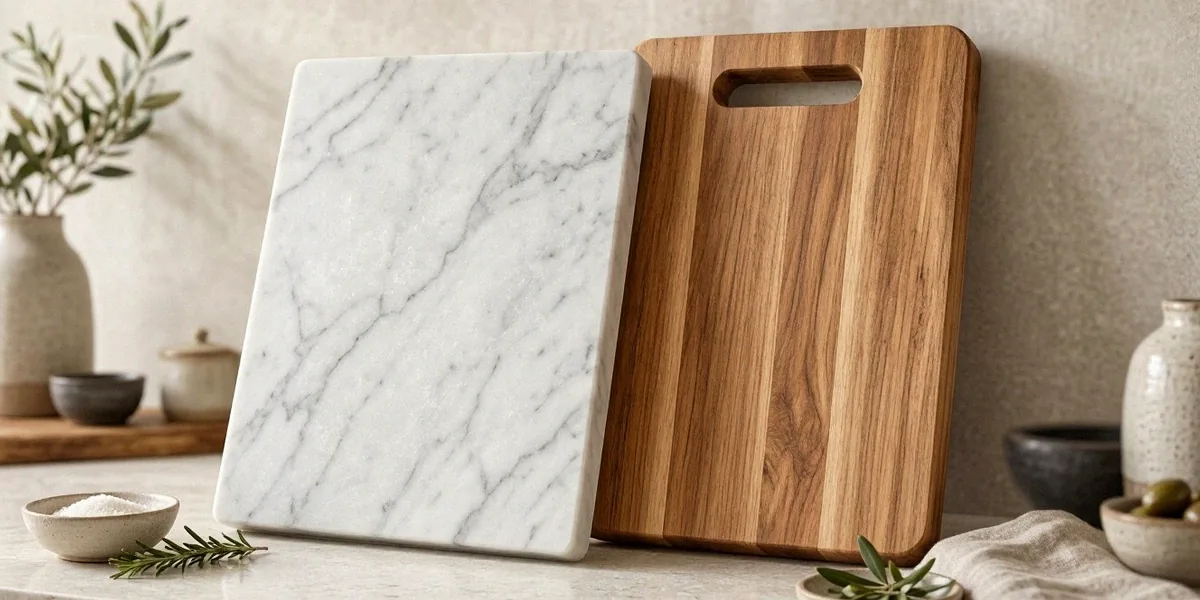
Marble and Wood Chopping Boards: Care and Styling
There’s a particular kind of joy in unboxing a beautiful chopping board. Maybe it was a Christmas gift from a friend who knows your kitchen obsession, or a personalised housewarming present with your family name etched into the grain. You lift it out, admire the weight and finish, and then a small voice asks: how on earth do I keep this looking pristine? And while we’re at it, can it actually earn its keep on the countertop rather than hiding in a cupboard? We’ve been there, and we’ve ruined a board or two learning the hard way. So here’s our practical guide to caring for and styling marble and wood chopping boards in a real, busy UK kitchen.
Why Marble and Wood Chopping Boards Deserve a Spot in Your Kitchen
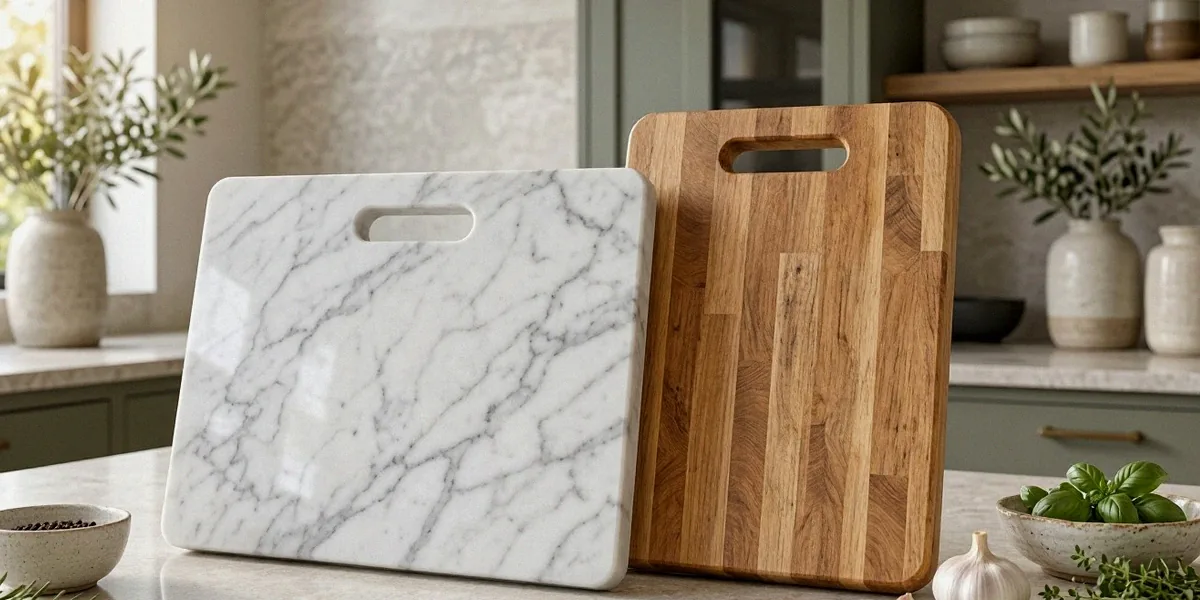
Both materials have earned their place in British homes for good reason. They’re practical, they age beautifully, and they photograph well enough for any dinner party. Whether you’ve picked up a board from John Lewis or found a bargain at a local market, understanding what each material offers helps you treat it properly.
The timeless elegance of marble
Marble boards bring a cool, clean look that suits everything from a modern grey kitchen to a period cottage. They’re naturally cool to the touch, which makes them brilliant for pastry and chocolate work, and they double as instant serving platters for cheese and charcuterie. Brands stocked by John Lewis and ProCook offer marble boards in classic white with grey veining, plus darker options for moodier schemes. The trade-off is that marble is porous and can stain or etch if you’re careless, so a little discipline goes a long way.
The warmth and durability of wood
Wooden boards feel warmer, quieter under a knife, and kinder to your blades than stone or plastic. A thick end-grain board from a brand like John Boos can last decades with proper care, while lighter acacia and beech options from Lakeland and Dunelm are perfect for everyday chopping. Wood also works as a natural serving surface, and many of our favourite personalised gifts are wooden boards engraved with names, dates, or recipes. Just remember that wood needs regular oiling to stay in shape.
Essential Care Tips for Marble Chopping Boards
Marble isn’t fragile, but it is sensitive. Treat it like a beautiful granite worktop: wipe up spills quickly, avoid harsh chemicals, and reseal it now and then. With a simple routine, a marble board can look showroom-fresh for years.
Daily cleaning and stain removal
After each use, wash your marble board with warm water and a pH-neutral washing-up liquid. We like Method or Ecover for this, since both are gentle and widely available in UK supermarkets. Rinse and dry immediately with a soft cloth, because standing water can leave marks. For stains, make a paste from bicarbonate of soda and a little water, apply it to the spot, cover with cling film, and leave for a day or two before rinsing. Avoid acidic foods like lemon, vinegar, and tomato on marble, as they can etch the surface. If you do spill, blot rather than wipe to stop the stain spreading.
Sealing and polishing for longevity
Even sealed marble benefits from a top-up every few months. Look for a food-safe marble sealer, often available from Lakeland or Amazon UK, and follow the instructions carefully. Apply in a well-ventilated room, let it cure fully, and buff with a dry cloth. A light polish with a microfibre cloth keeps the shine without adding residue. If your board is used only for serving rather than chopping, you can seal it less often, but never skip it entirely.
How to Care for Wooden Chopping Boards
Wood is forgiving but thirsty. It needs oil, it hates long soaks, and it rewards you with a rich patina over time. Our rule of thumb: oil little and often, wash quickly, and never leave it wet.
Oiling and conditioning routines
Once a month, or whenever the wood looks pale and dry, apply a food-safe mineral oil. Lakeland stocks well-known brands, and John Boos boards often come with their own conditioning oil. Warm the oil slightly, apply it with a lint-free cloth along the grain, and let it soak in for several hours or overnight. Wipe off any excess, then buff with a clean cloth. For boards used daily, oil every two to four weeks. Avoid olive oil and vegetable oil, as they can turn rancid.
Cleaning and sanitising without damage
Wash wooden boards by hand with hot soapy water, rinse briefly, and dry immediately with a tea towel. Never put them in the dishwasher and never submerge them in the sink. To sanitise, rub the surface with half a lemon dipped in coarse salt, then rinse and dry thoroughly. For stubborn smells like onion or fish, a paste of bicarbonate of soda and water works wonders. Let the board air-dry standing on its edge so both sides dry evenly, and store it somewhere with airflow rather than flat against a wall.
Styling Your Chopping Boards: From Countertop to Table
A chopping board doesn’t have to live in a cupboard. With a bit of thought, it becomes part of your kitchen’s look, whether that’s a relaxed farmhouse vibe or a sleek modern scheme.
Everyday countertop arrangements
Lean a large marble or wood board against the splashback behind your hob, then layer a smaller board in front with a jar of utensils or a small plant. Dunelm and Habitat both sell affordable board sets that work well for this. A round wooden board with a pot of herbs and a salt pig makes a simple, useful vignette. Rotate boards seasonally: darker wood for autumn and winter, pale marble for spring and summer.
Entertaining and tablescaping ideas
Use a large marble board as a cheese and charcuterie platter, with smaller wooden boards for bread, olives, and sliced fruit. A personalised board engraved with a family name makes a lovely centrepiece for a birthday or wedding gift. For casual gatherings, stack two or three boards at different heights on a table runner, add candles and linen napkins, and you’ve got a tablescape that looks considered without being fussy. We also love hanging small decorative boards on a kitchen wall as rustic art, especially in rented homes where you can’t drill into tiles.
Common Mistakes to Avoid with Marble and Wood Boards
Most damage we see comes from a handful of avoidable habits. Good Housekeeping UK has warned about several of these over the years, and we’ve made a few of the mistakes ourselves.
What not to do with marble
- Don’t use vinegar, bleach, or abrasive cleaners, which can dull or etch the surface.
- Don’t cut directly on marble with a sharp knife if you want to preserve the finish.
- Don’t leave red wine, beetroot, or turmeric sitting on the surface.
- Don’t place hot pans straight onto the board, as thermal shock can crack it.
What not to do with wood
- Don’t soak wooden boards or leave them in the sink overnight.
- Don’t put them in the dishwasher, even on a gentle cycle.
- Don’t dry them flat on a worktop, as they can warp or grow mould underneath.
- Don’t use harsh chemicals or scented cleaners, which can taint the wood.
Our Favourite UK Brands and Where to Buy
We’ve tested and gifted a lot of boards over the years, and these are the names we keep coming back to.
High-street and online retailers
Joseph Joseph is hard to beat for clever, modern designs, including boards with folding and nesting features. Dexam offers a broad range of wood and marble options at sensible prices, while The White Company is our go-to for understated, gift-worthy pieces. John Lewis and ProCook cover the mid-range beautifully, and Dunelm and Habitat are great for affordable everyday boards. For online convenience, Amazon UK stocks most of these brands plus a huge range of oils and sealers.
Artisan and personalised options
If you’re buying a gift, a personalised board is hard to beat. Independent UK makers on Etsy and Not On The High Street will engrave names, recipes, or coordinates onto oak, walnut, and acacia boards. Pair one with a bottle of mineral oil and a handwritten care card, and you’ve got a present that feels genuinely thoughtful. For soft toys to go alongside a new-home gift, we often suggest a small woodland animal from a British maker to complete the hamper.
FAQ
How often should I oil a wooden chopping board?
For daily use, oil every two to four weeks. If the board looks pale or feels dry, it’s overdue. A monthly routine is plenty for occasional cooks.
Can I use olive oil on my wooden board?
We don’t recommend it. Olive oil can turn rancid over time and leave a sticky residue. Stick to food-safe mineral oil, which is widely available from Lakeland and Amazon UK.
How do I remove a stain from a marble chopping board?
Make a paste of bicarbonate of soda and water, apply it to the stain, cover with cling film, and leave for 24 to 48 hours. Rinse and dry thoroughly. For oil-based stains, a little washing-up liquid and warm water usually does the trick.
Can I put my chopping board in the dishwasher?
No. Dishwashers will warp and crack wood and can dull or damage marble. Always wash by hand and dry immediately.
Are marble boards safe for chopping raw meat?
Marble is non-porous when sealed, so it’s fine for raw meat as long as you wash and sanitise it thoroughly afterwards. Wood is also safe if cleaned properly, but we’d suggest keeping a separate board for raw meat to be extra careful.
With a bit of regular care, a good marble or wood chopping board will outlast most of your kitchen gadgets and still look lovely on the counter. Oil the wood, seal the marble, dry both properly, and you’ll have a piece that works hard for years and makes a beautiful gift for someone else’s kitchen too.



Post Comment